ጉጉት · Addis Ababa, Ethiopia
Request a proposal
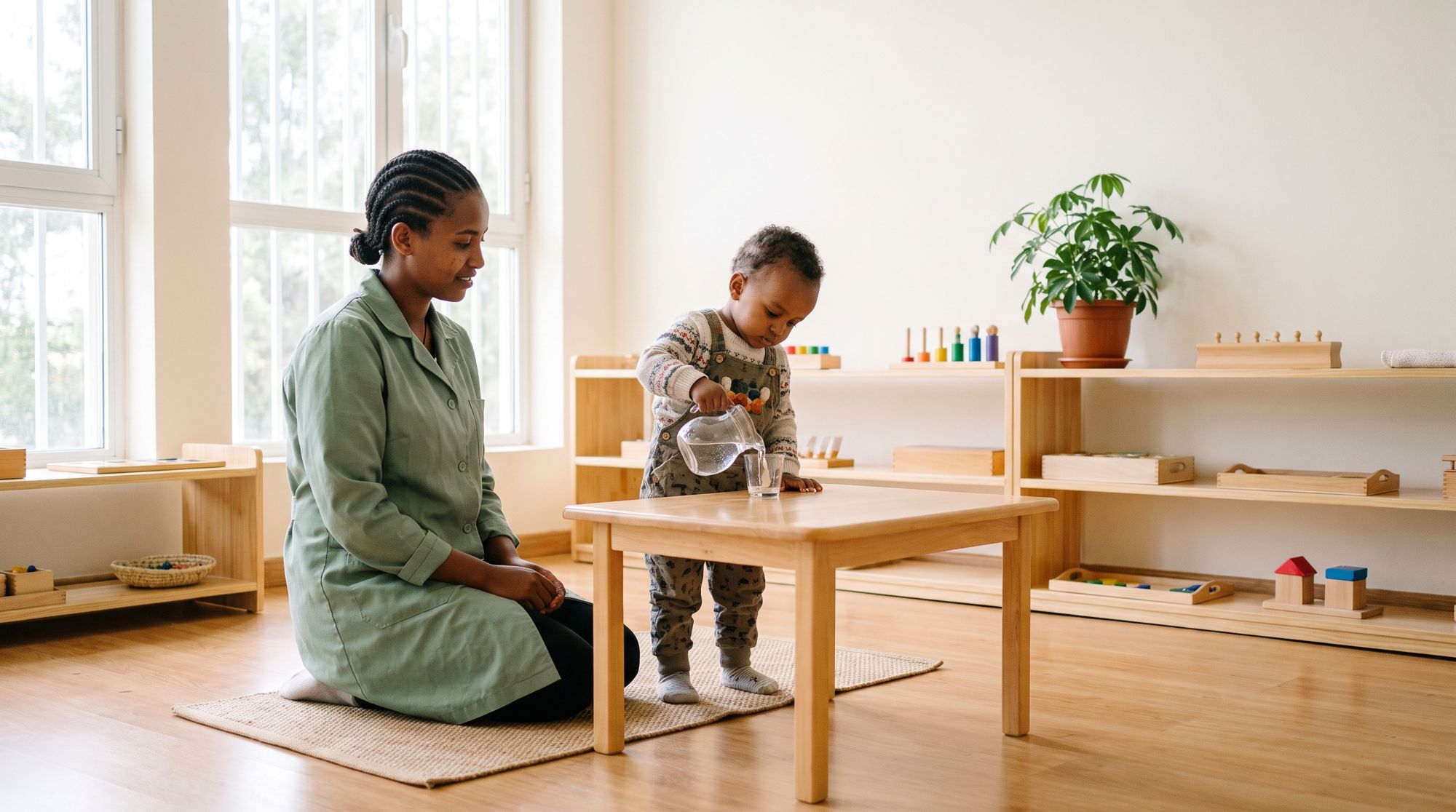
A caregiver kneels beside a toddler who pours water from a small jug at a low wooden table

For funders and partners

Invest in the adults who raise Ethiopia’s youngest children.

GMIC builds Ethiopia’s early childhood workforce. We train caregivers for public and community daycares, make their learning materials in our own Addis Ababa workshop, and link training to paid work for women. A two-generation model: children get a better start, and mothers can work.

We work with
  • Foundations & trusts
  • Government offices
  • NGOs & UN agencies
  • Employers & CSR
  • Diaspora & individual donors
Ethiopia is opening daycares faster than it can train the people who work in them. We train those people, make the materials they need, and create the jobs that keep it all going.
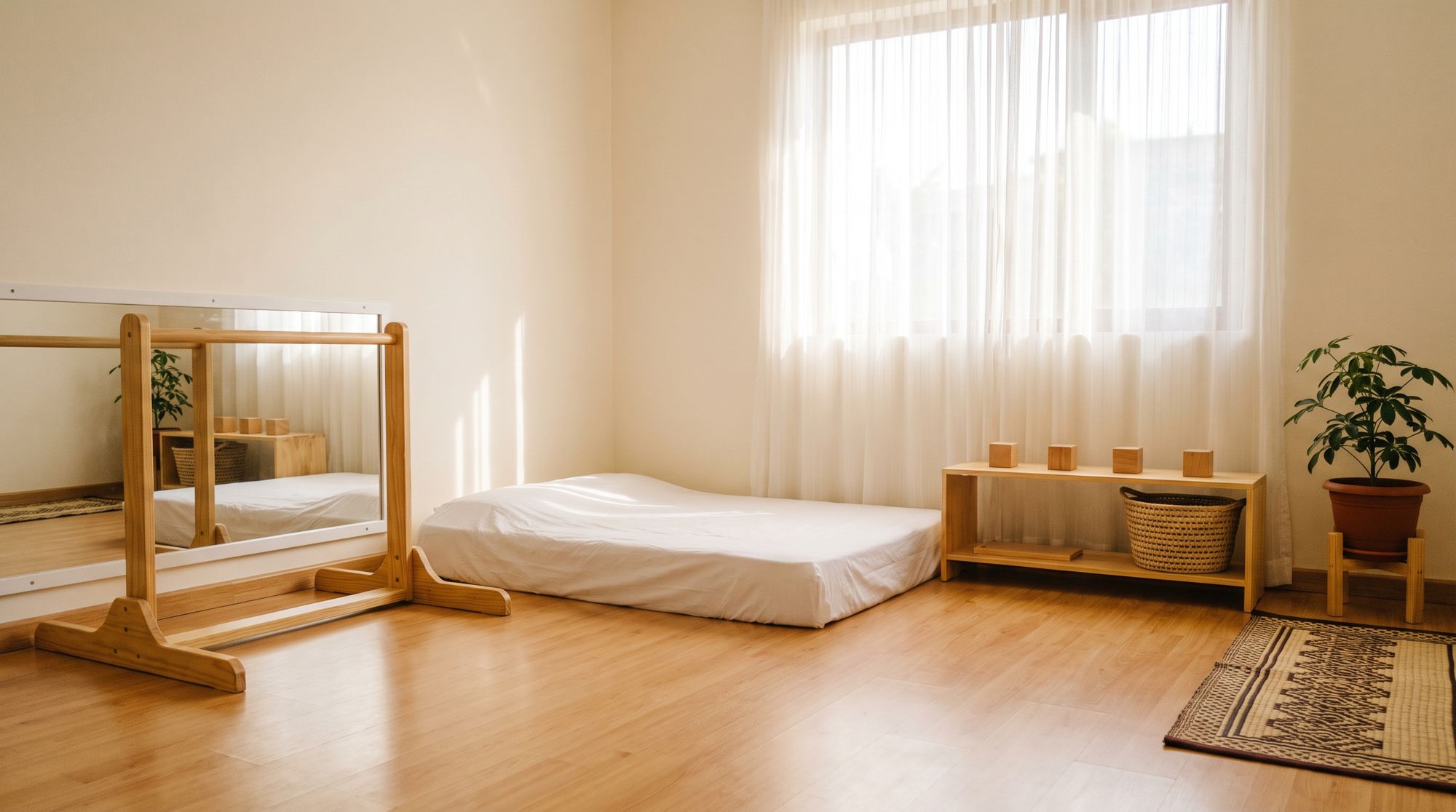
A caregiver smooths the fitted sheet on one of several low wooden Montessori floor beds in a calm nap room
A prepared nap room: a low wooden floor bed for each child, a fitted sheet and nothing else in the bed.

The need

Daycares are opening. Skilled caregivers are not.

Addis Ababa has made early childhood a city priority and is opening public childcare at speed. Each new room needs adults trained in infant and toddler care, and Ethiopia has nowhere to train them to an international standard.

1.3M

children under six live in Addis Ababa. The city aims for 95% to be developmentally on track by 2030.

1,000+

public childcare centres the city reports opening since 2023, each needing trained 0–3 caregivers.

26 h

a week of unpaid care work done by Ethiopian women, against about 6 for men. Daycare gives mothers back hours to earn.

0

AMI-recognised Montessori training centres in Ethiopia. The nearest are in Dar es Salaam and Cape Town.

Sources: Bloomberg Cities, “Addis Ababa tackles poverty” (2024); Mayor of Addis Ababa, reported in The Reporter (May 2026); Policy Studies Institute study, reported in Capital (Aug 2026); Association Montessori Internationale, training centre directory (2026).

Built to fit national and city plans

Addis Ababa early childhood programmeTrained caregivers and materials for the city’s expanding public daycares
Education and Training Policy 2023Supports Ethiopia’s commitment to expand pre-primary care and education
WHO / UNICEF Nurturing Care FrameworkOur course and quality checks follow its five components of care
Childcare as economic infrastructureThe World Bank and ILO case for childcare as a driver of women’s jobs

Our model

Train, make and employ, under one roof.

Most training centres live on tuition alone. GMIC sits above a working production workshop. That keeps materials affordable, lets trainees see how every piece is made, and turns training into paid work.

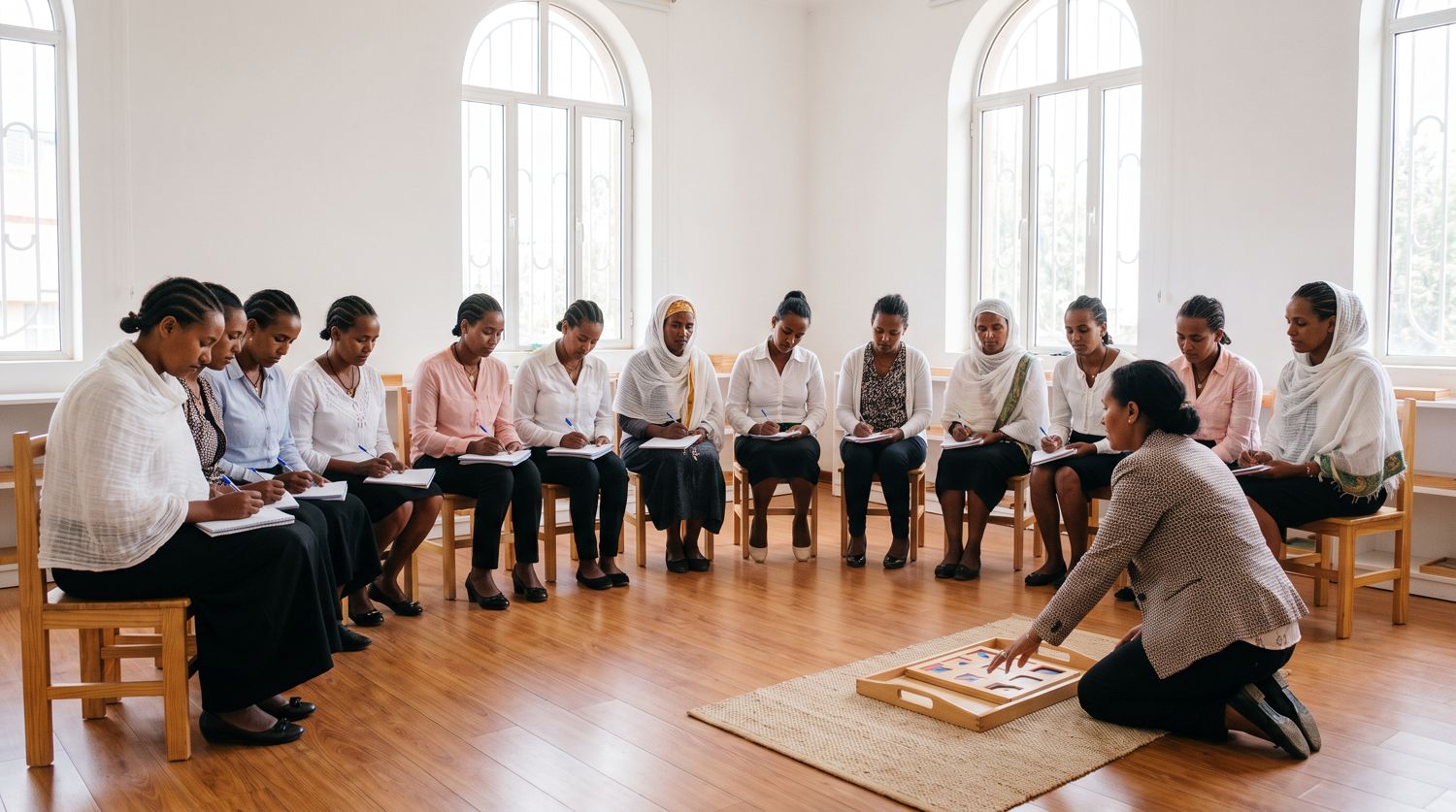
Women trainees take notes while a trainer demonstrates a wooden puzzle Train

A ladder of practical courses

From a short orientation to a nine-to-twelve-month caregiver course with supervised practice in real daycares. Taught in Amharic, built on careful observation of children, and led by Montessori-trained faculty with our own nurses and doctor for health and nutrition.

  • Theory, demonstration and hands-on practice
  • 250+ hours of observation and supervised practice
  • Taught in blocks so working caregivers can attend
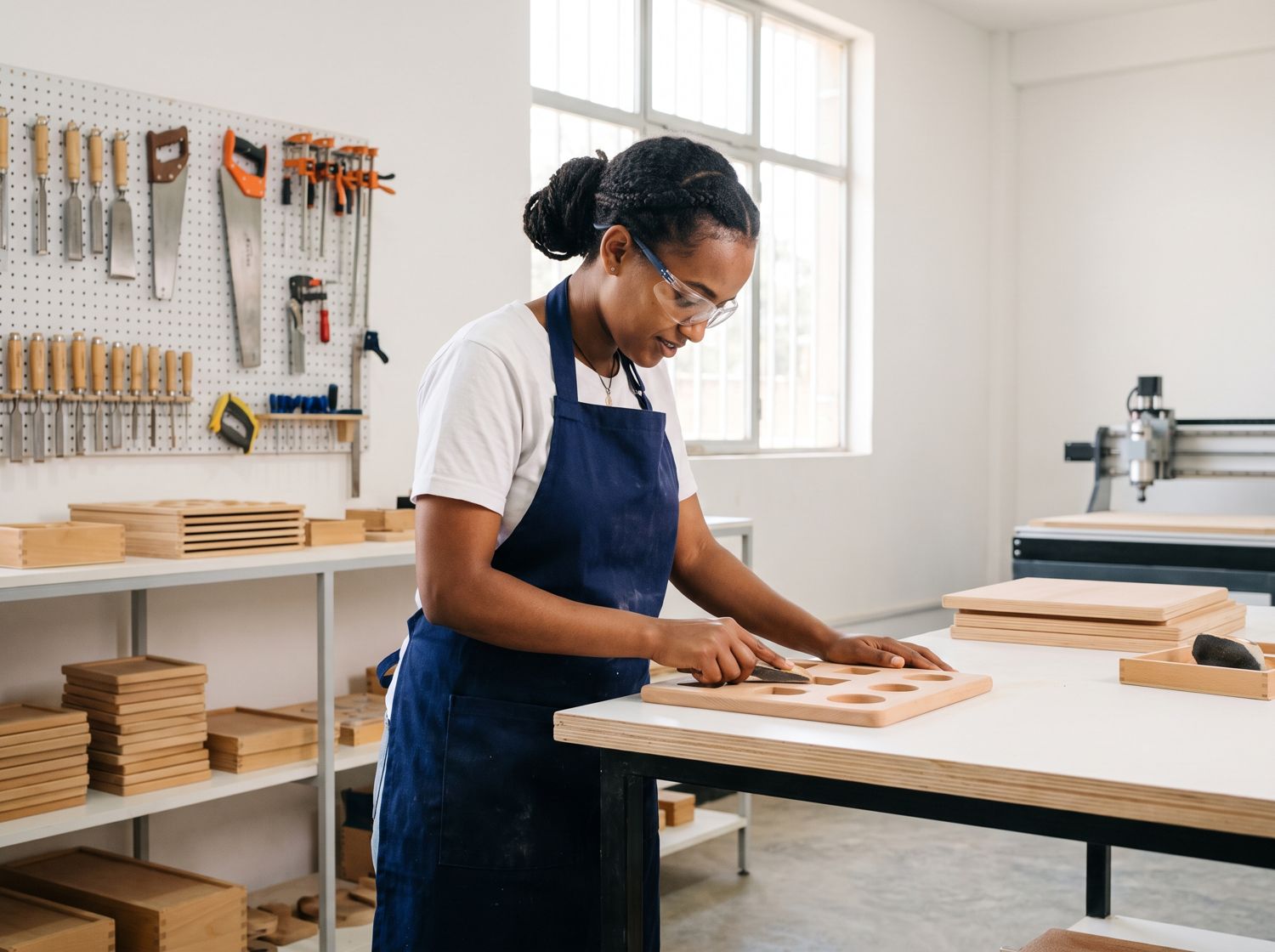
A young woman sands a wooden learning material at a workshop bench Make

Materials made in Ethiopia

Our workshop designs and produces wooden Montessori materials, child-sized furniture and illustrated storybook kits in Amharic, English and Wolayttattuwa. Every graduate leaves with an environment they can afford to set up.

  • Precision wooden materials and furniture
  • 27 curriculum-aligned topic kits
  • Local supply instead of costly imports
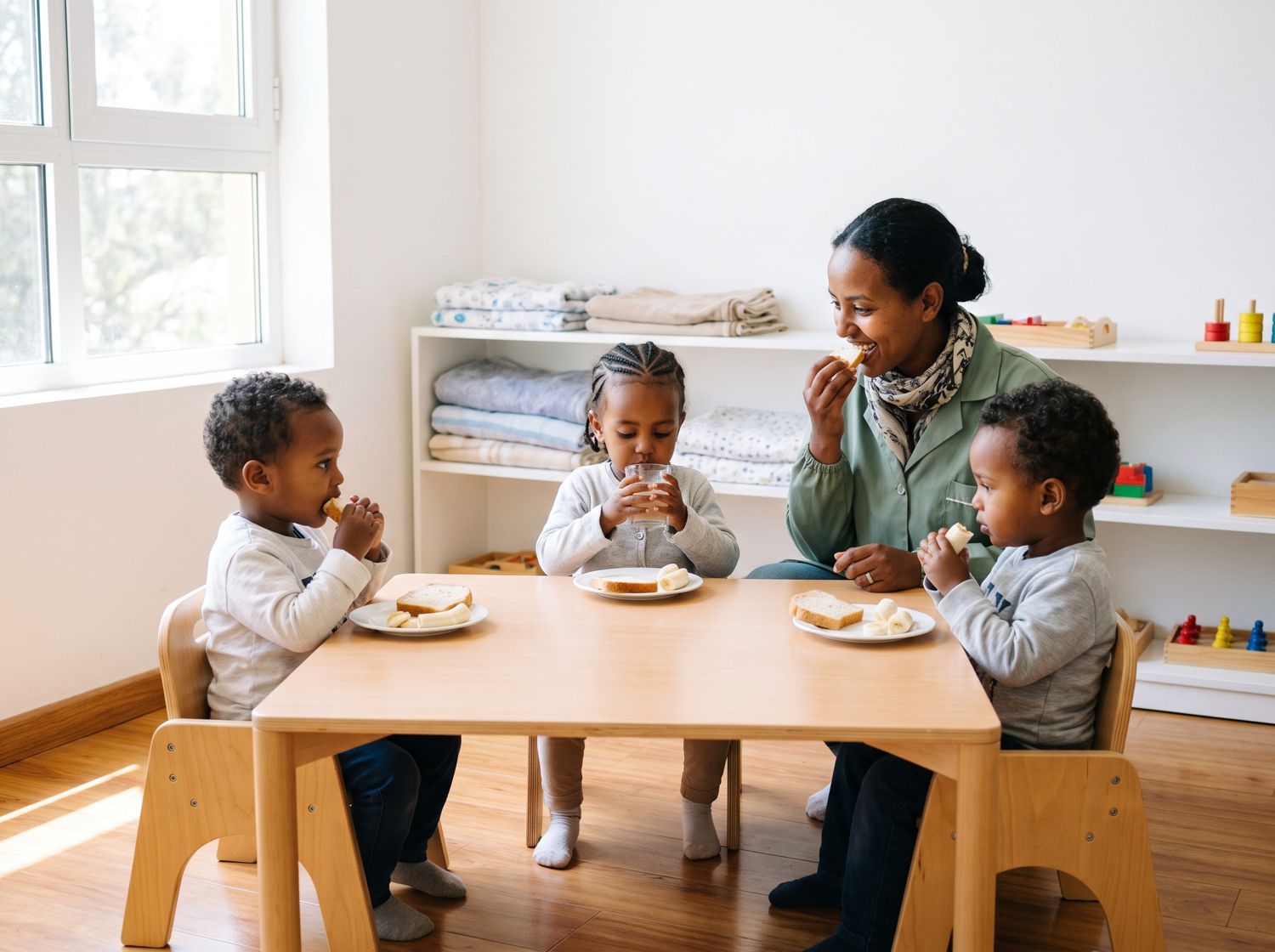
A caregiver eats with three toddlers who feed themselves at a low table Employ

Decent work, mostly for women

Built on four years of our Design for Decent Work programme, where 76% of tracked graduates found work, training leads to real jobs: in our workshop, in daycares and as mentors. Every trained caregiver also frees parents, most often mothers, to work.

  • Training linked directly to employment
  • Career path from assistant to mentor
  • Childcare that lets families earn
Children get a strong startWomen can join the workforceSkilled local jobs are created

Proven: Design for Decent Work

We have done this before, and reported every quarter.

Since 2022 our skills-to-employment programme, funded by Partnership for Change (Norway), has trained women for decent jobs in Ethiopia’s leather sector. GMIC applies the same model to early childhood: practical training, linked to real jobs, measured against agreed targets.

754trainees enrolled since 2022, plus 43 trainers trained
76%of tracked graduates employed or self-employed (431 of 570)
8,000birr average monthly salary of employed graduates
95%of employed graduates earn above a living wage

Source: D4D quarterly performance report to Partnership for Change, Q2 2026. Cumulative figures; employment tracked for long-term graduates.

“Design for Decent Work provides a safe and practical pathway for women to enter the workforce. The program respects women’s responsibilities while giving them skills that lead to dignity and independence.”
Head of the Woreda 11 Women, Children and Social Affairs Office, Addis Ababa

Track record

RecognisedCertificate from the African Center for Early Childhood Development

Awarded by AfC-ECD, the centre established by the Addis Ababa City Administration. In 2025 Savannah Printing Press also received Bole Sub-City’s trophy for outstanding impact in training women and creating jobs, and our work was featured on ETV.

DeliveredLearning materials for 50 schools

Kindergarten kits of books, puzzles, pegs and game cards, made in our workshop for 50 schools through the Wolayta Zone Education Bureau in 2026.

DeliveredKebebe Tsehay Orphanage, furnished

Child-sized furniture and learning materials for the children’s spaces, made in our own workshop.

Government partnerWoreda 11 community daycare

A model infant and toddler room and caregiver training, supported by the Woreda 11 Women, Children and Social Affairs Office.

Who we reach

Every adult in a young child’s day.

Three groups, one standard of training. Partner funding goes where it changes the most children’s days: caregivers in public and community settings. Course details at gugutmic.com

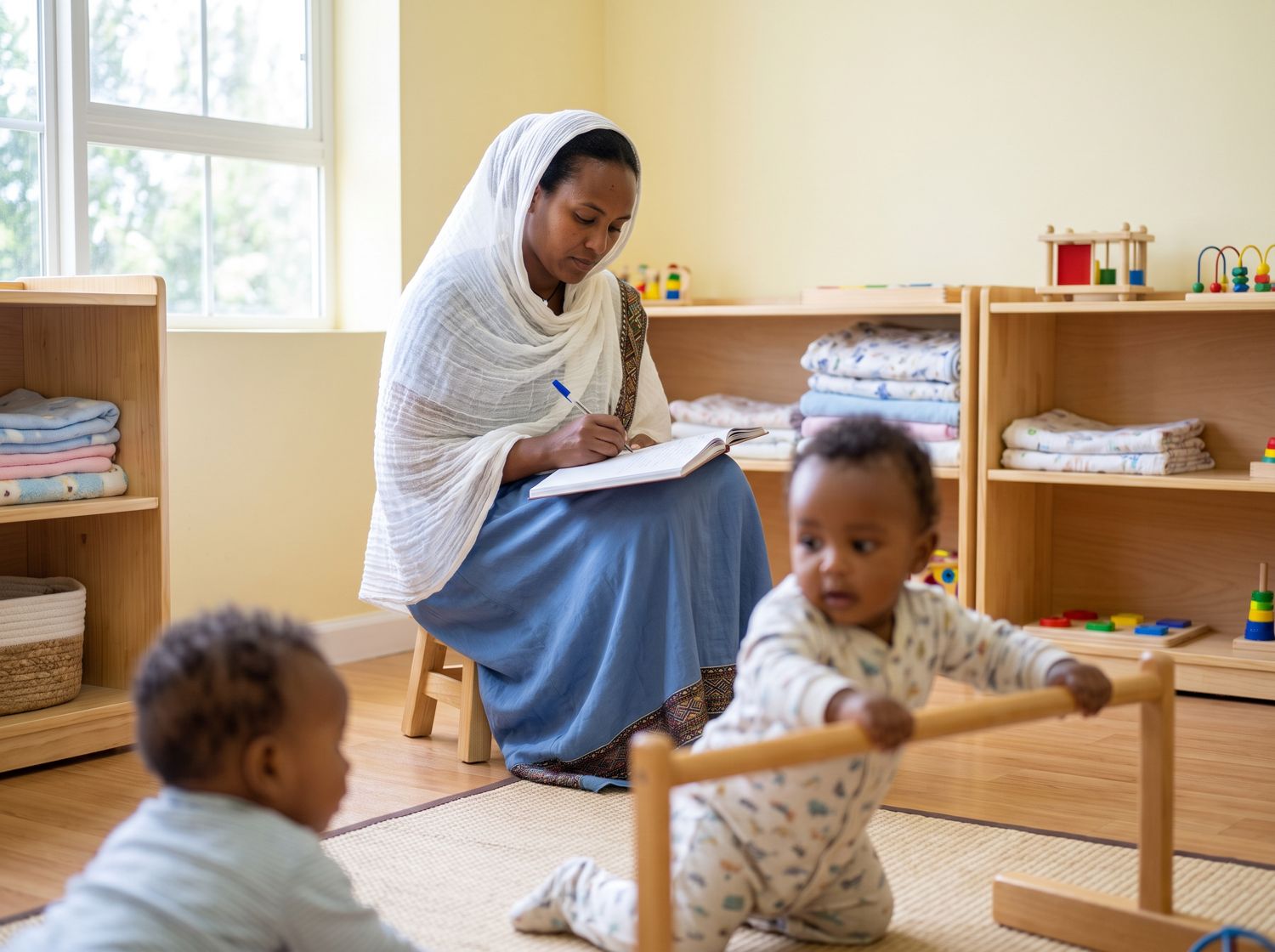
A trainee caregiver observes infants and takes notes
Partner priority

Public & community caregivers

Caregivers in government daycares, O-Class programmes and community centres, most of whom have never had training.

  • What changes

    Safe, calm rooms; respectful feeding, sleep and hygiene routines; children moving, talking and doing things for themselves.

  • What partners fund

    Course places, materials for each room and a year of on-site mentoring.

    Partner-funded
Trainees take notes as a trainer demonstrates a wooden puzzle
Earned income

Private schools & daycares

Owners and teams who pay full fees for training, set-up and mentoring.

  • Why it matters to partners

    Their fees pay trainers and keep the centre open all year, so partner money buys places, not overheads.

    Fee-paying
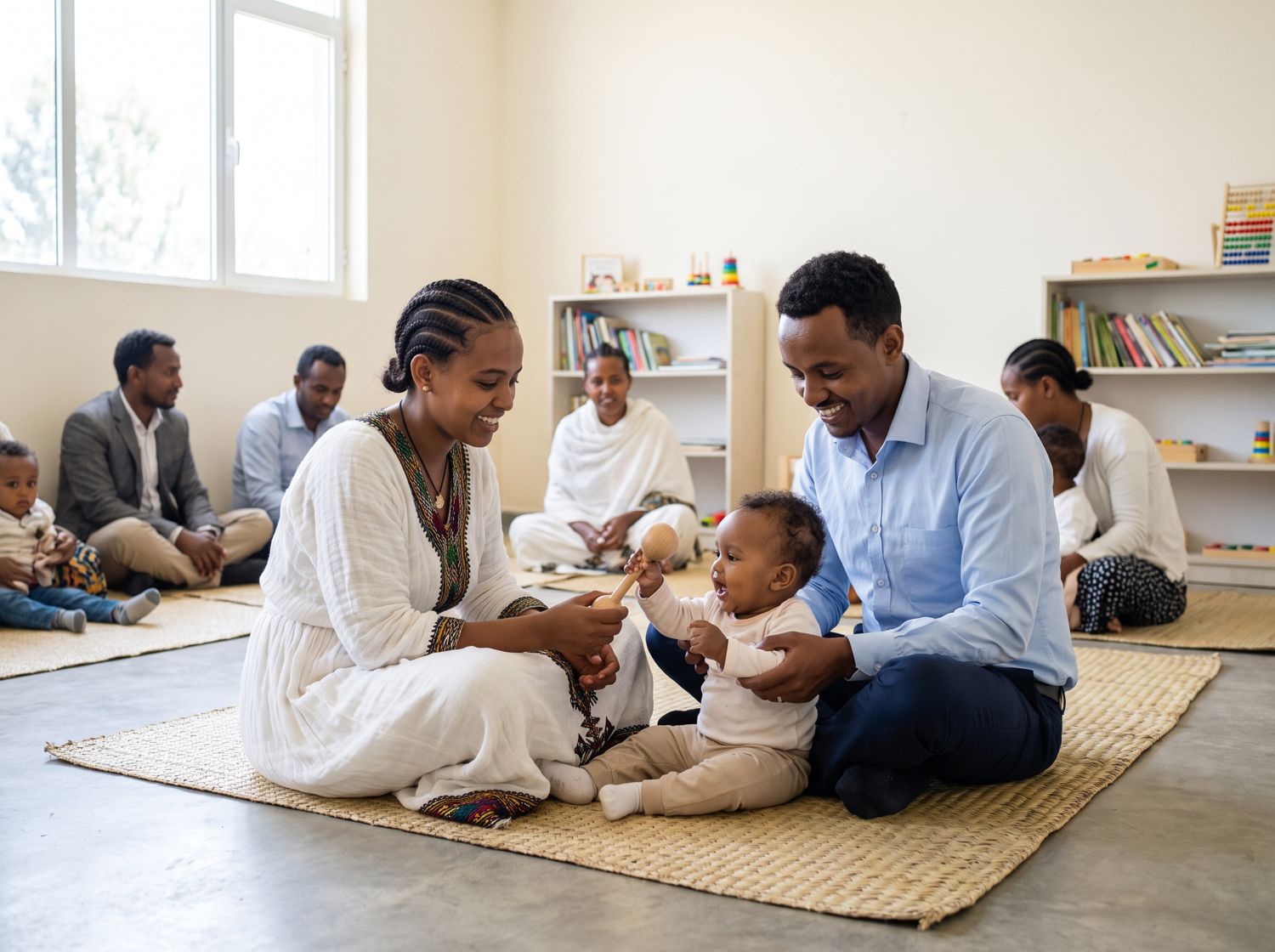
Parents sit on a mat with their baby, who reaches for a wooden rattle
Families

Parents & carers at home

Parents, expectant parents and grandparents, in Amharic.

  • Why it matters to partners

    What a child learns in daycare lasts when the home follows the same approach. Family sessions can be added to any sponsored daycare.

    Fee-payingSponsorable

Why your funding goes further

Two ways in. One standard of training.

We do not run a lighter course for charity. Paying participants keep the centre open year-round. Partners fund places for people who could never pay, in the same rooms, with the same trainers.

Earned income

Participants and institutions pay

  • Course fees from parents, private schools and owners
  • Training contracts with schools and programmes
  • Materials, furniture and classroom set-up
  • Observation days, events and venue hire
Partner funding

Partners open the door wider

  • Sponsored places for caregivers in community and public daycares
  • Whole-daycare transformation packages
  • A scholarship fund for low-income trainees
  • Capital to complete the training centre

Earned income covers the running costs, so every birr a partner gives goes further. We have shown it works: after donor funding for D4D ends in 2026, we have committed to keep training about 200 women a year from our own income.

Partner with us

Choose what your support makes possible.

Each option has a clear result you can report on. When you are ready, we prepare a detailed budget around the programme you choose.

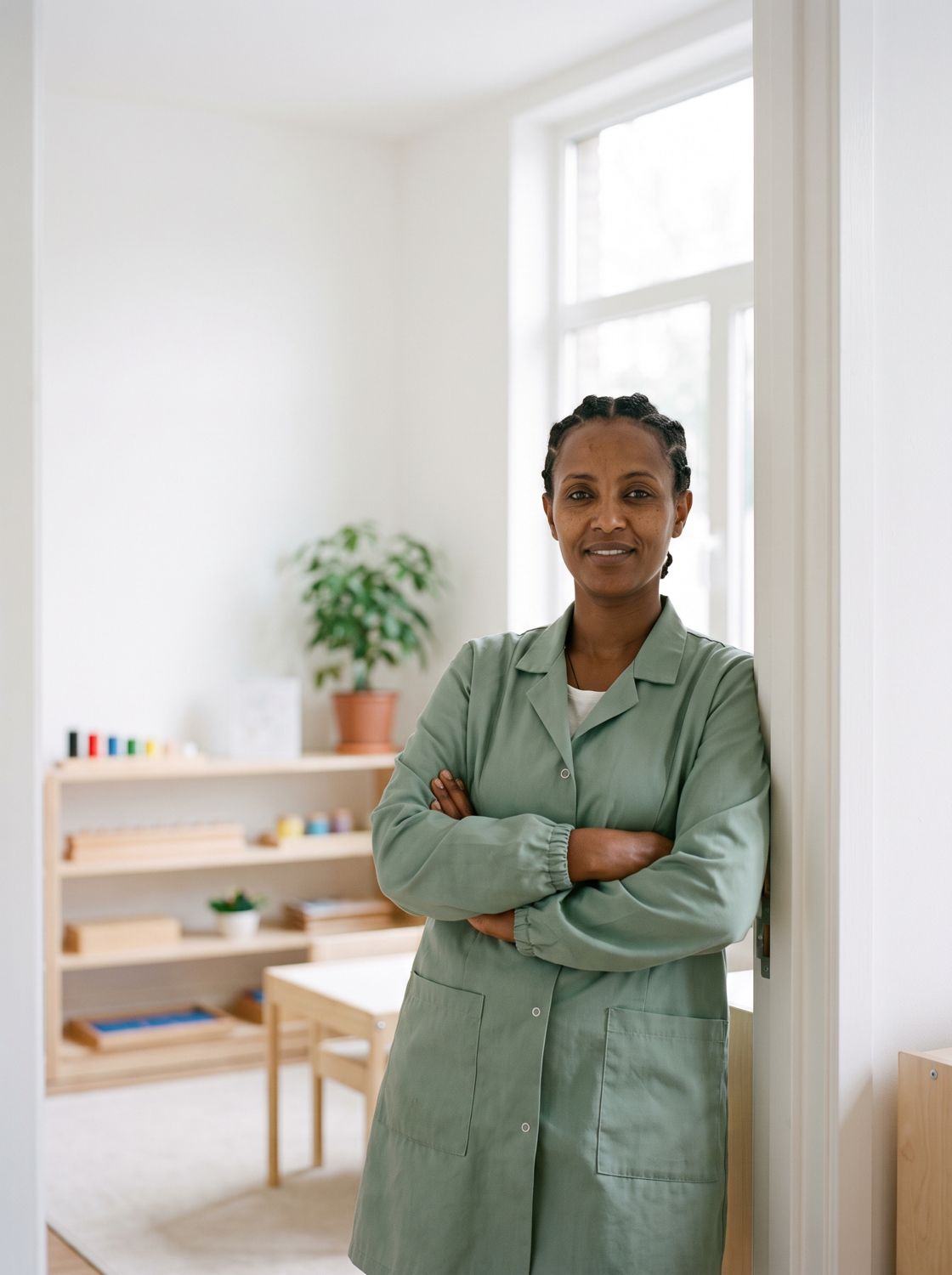
A caregiver in a green smock stands in a daycare doorway
Our core ask

Sponsor a caregiver

Her full 0–3 courseincluding her own set of materials · budget on request

She learns to read a child's needs, prepare a safe and calm environment, and support movement, language and independence. She then returns to a daycare where a dozen children feel the difference every day.

One caregiver, years of impact. Her skills keep serving new children long after her course ends.

Progress report at each block
Completion record and placement
Her story, shared with consent

Adopt a daycare

Budget on request12 months per daycare

We train all of a daycare's caregivers, equip a proper infant-toddler room and mentor the team on site for a year.

Before-and-after review and a case study

Fund a cohort

15–25 traineesone complete course cycle

Underwrite a full cohort for a sub-city, a region or a workforce you care about. Co-branded if you wish.

Cohort report with outcomes and placements

Fund an orientation seat

Per person5–10 days · budget on request

A new caregiver or assistant gets a solid, practical start. Group rates apply for whole teams.

Attendance and assessment summary

Seed the scholarship fund

Any amountpooled, multi-year

A standing fund that tops up fees for low-income trainees so every cohort can be full.

Annual fund report

Contract our training

Per programmegovernment, NGO and employers

Training, materials and mentoring delivered inside your early-childhood or workplace-childcare programme.

Monitoring and reporting to your standards

Share your expertise

In kindtrainers, mentors, practice sites

Visiting trainers, mentors, and settings that can host and supervise trainee practice.

Recognised in our annual report

Want to help finish the centre itself? See the capital opportunity below.

Impact and accountability

What we measure, and what you receive.

Every partnership starts with agreed targets and a baseline. Our indicators follow the Nurturing Care Framework: good health, adequate nutrition, safety and security, responsive caregiving and early learning. We use standard observation tools for room quality and child development, and never share a child’s photo or name without written consent.

  1. InputTraining, materials and mentoring
  2. CaregiversSkilled, confident and employed
  3. DaycaresSafe, calm, well-run rooms
  4. ChildrenDevelopmentally on track
  5. FamiliesMothers free to work and earn
Caregivers
  • Trainees enrolled and completing
  • Practical skills, observed and scored at each block
  • Working in early care six months later
  • Promoted to lead caregiver or mentor
Settings
  • Room quality, observed before and after
  • Materials in place and in daily use
  • Daily routines followed: feeding, sleep, hygiene
  • Staff kept on after training
Children & families
  • Children in trained caregivers’ care
  • Movement, language and independence, observed over time
  • Parents taking part in family sessions
  • Parents, mostly mothers, able to work
Before you commitA detailed budget, targets and a timeline for your programme
DuringA progress report after each training block, and an open invitation to visit
At the endAn outcome report, a case study and stories shared with consent
Every yearA public impact report, from 2027, and accounts shared with every partner
Toddlers feed themselves at a low table while their caregiver sits with them
Independence at the table: children serve and feed themselves while the caregiver eats with them.

In the field

A model infant daycare in Woreda 11.

A new government community daycare near our centre cares for infants and toddlers from vulnerable families. Its materials were designed for older children. With the support of the Woreda 11 Women, Children and Social Affairs Office, we are changing that.

12caregivers to be trained in 0–3 care
30children now in its care
3 mopilot, then review and scale
  • Training at GMIC plus coaching on the job
  • An age-appropriate infant room and starter materials
  • A supervised practice site for our trainees
  • Strict safeguarding: no photos or details of children without written consent
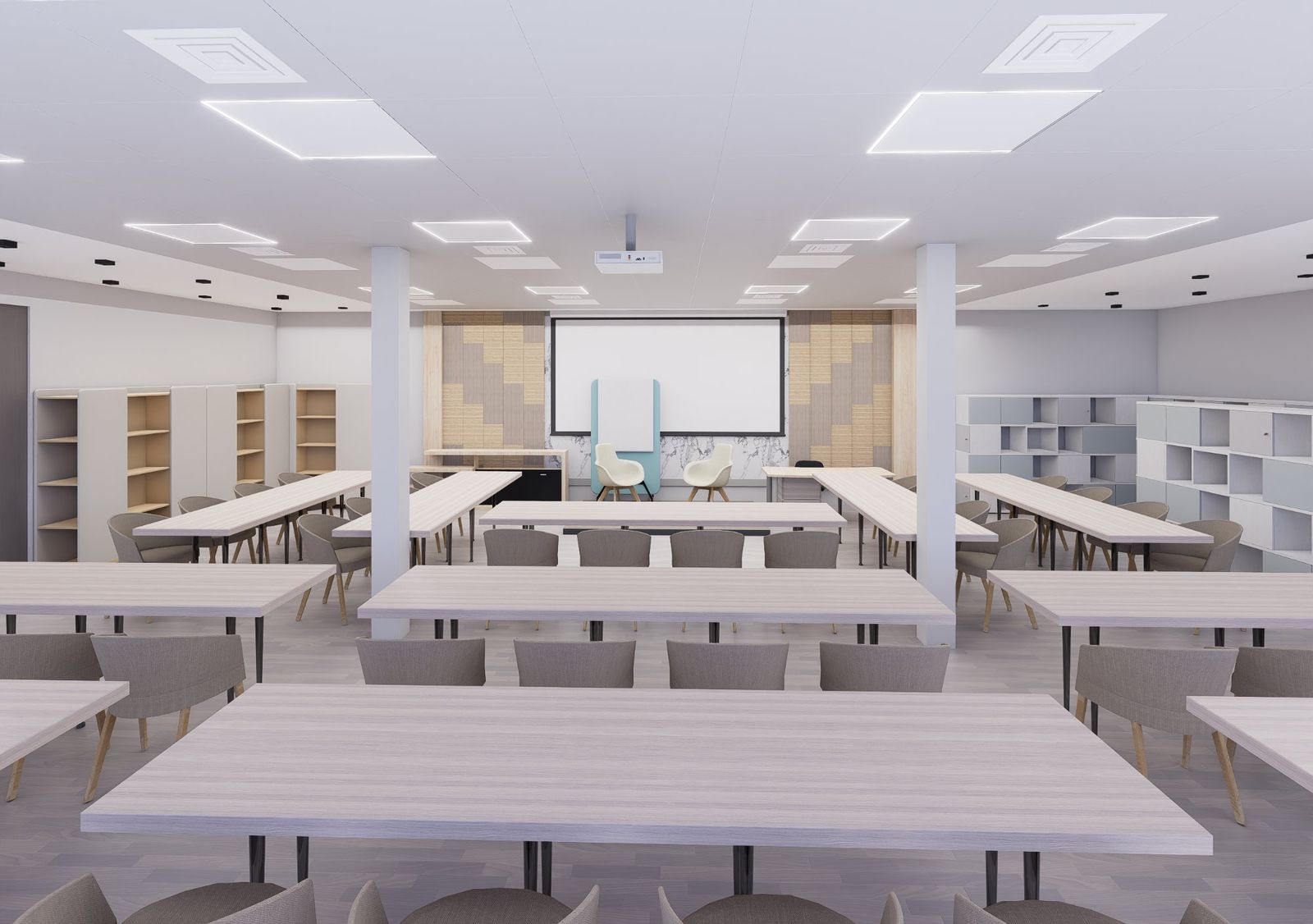
Architect's render of a GMIC training hall: long light-wood tables, materials shelves along the walls and a projection screen at the front Architect's render · floor 2

Capital opportunity

Help us finish Ethiopia's home for Montessori training.

Our G+4 building in Summit, 8 km from Bole International Airport, already runs a production workshop, showroom and studio on its own transformer and backup generator. We built it ourselves, floor by floor: the structure and block work of floors 2 and 3 are complete and being fitted out. What remains is the top floor and the rooftop terrace.

Naming opportunities

The top floor
Model classroom, library and materials display
The rooftop terrace
Gatherings, ceremonies and open-air learning
A training hall
Where caregivers and teachers learn
A trainee room
Where trainees from across Ethiopia stay while they learn
The children's environment
The Montessori room at the heart of the centre

Floors, halls and rooms can carry a partner's name, in recognition and at GMIC's discretion. We share the remaining budget and naming options in conversation.

TerraceOutdoor learning and gatheringsTo finish
Floor 4Model classroom, library, materials displayTo finish
Floor 3Residence for about 15 trainees, kitchen, study loungeStructure complete · fitting out
Floor 2Training halls for 0–3 and 3–6, observation roomStructure complete · fitting out
Floor 1Showroom and studio, in use for trainingOpen now
GroundMaterials production workshopOpen now
BasementPrinting press and CNCOpen now

Inside the finished centre

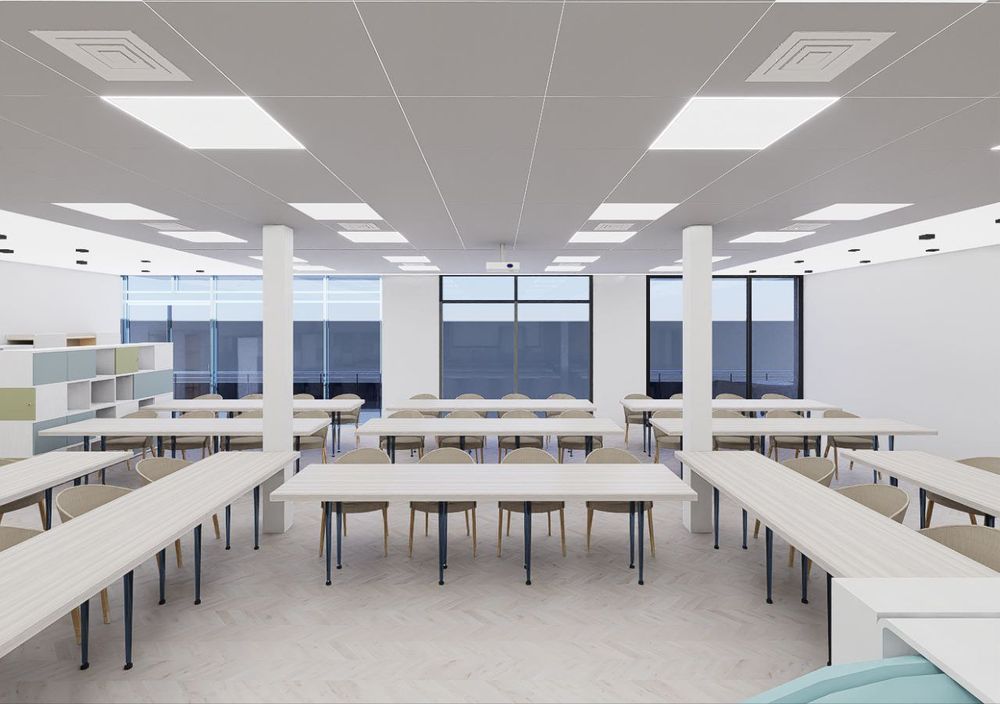
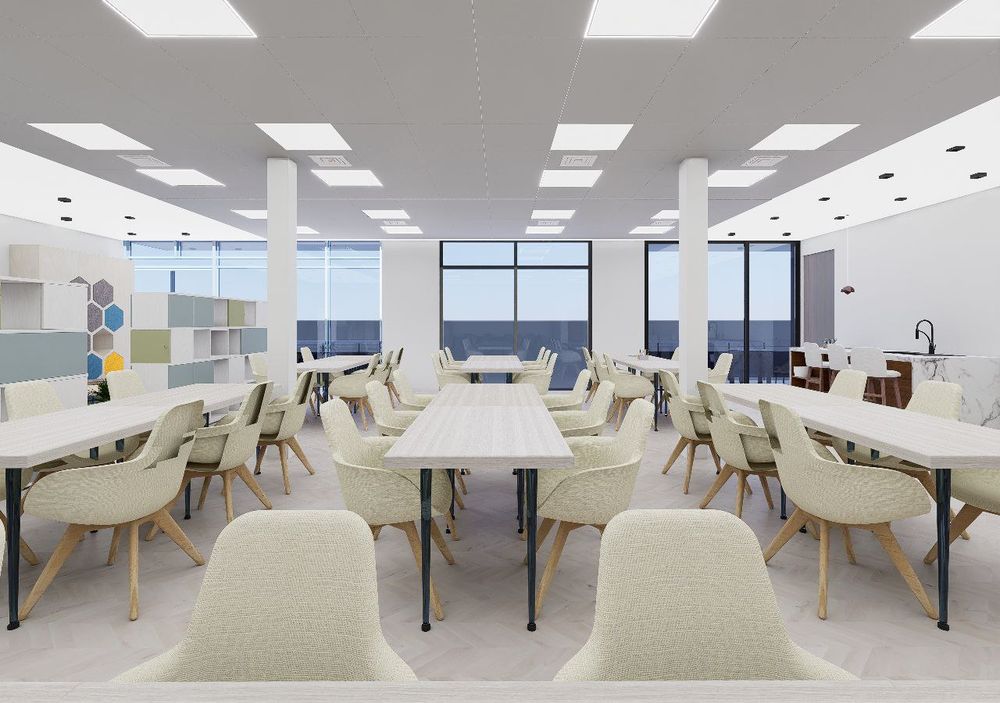
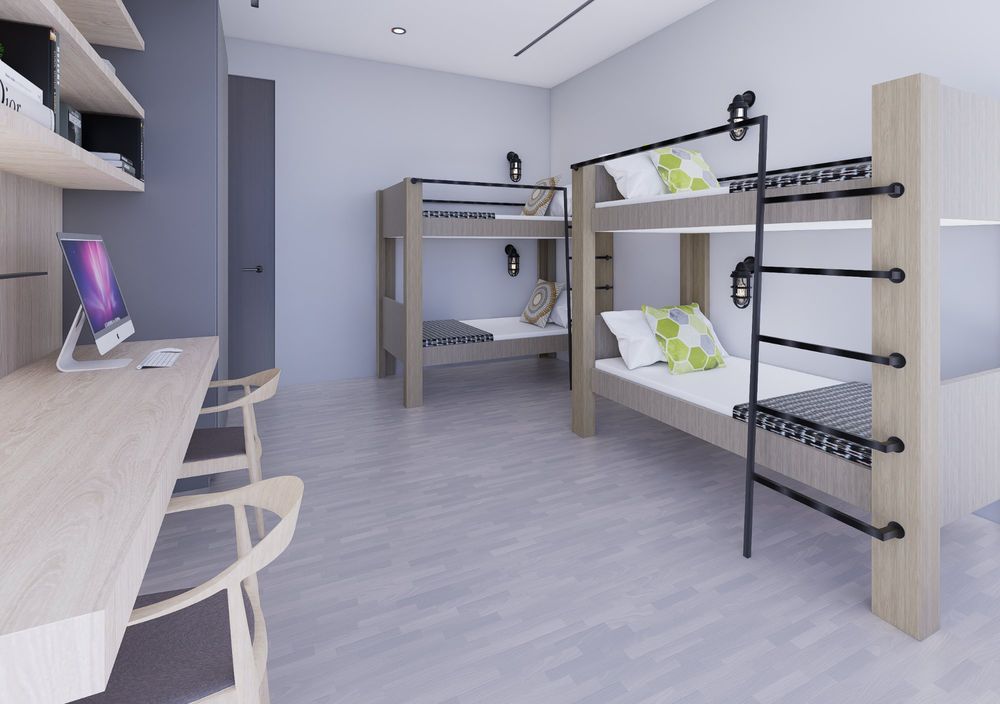
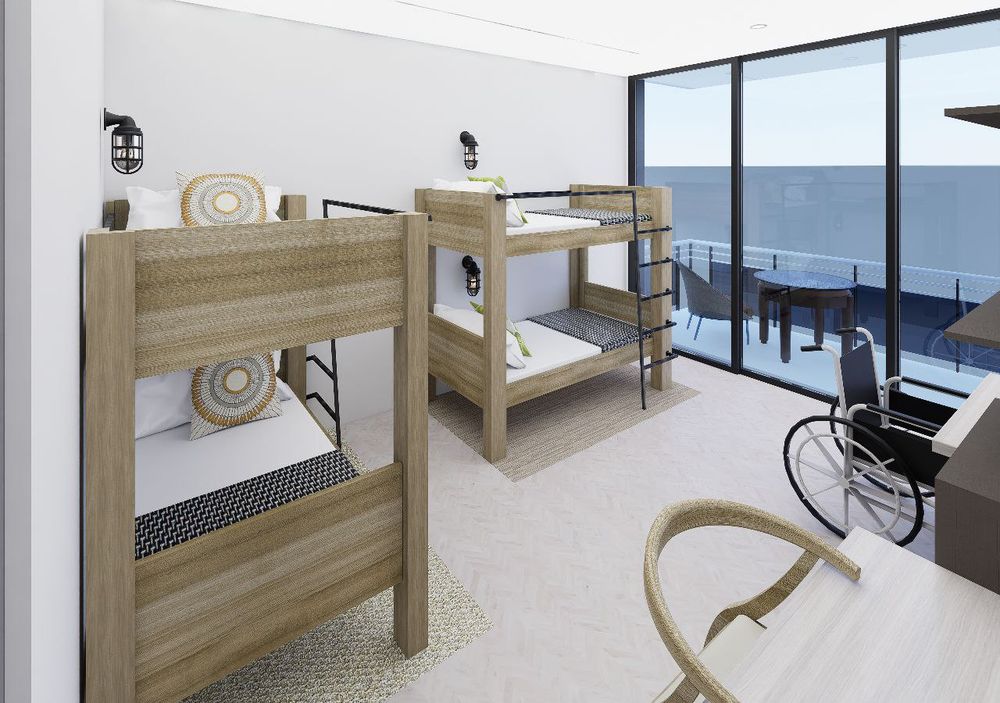
Architect's renders of the interiors we are completing: where caregivers train, practise with children and stay while they learn.

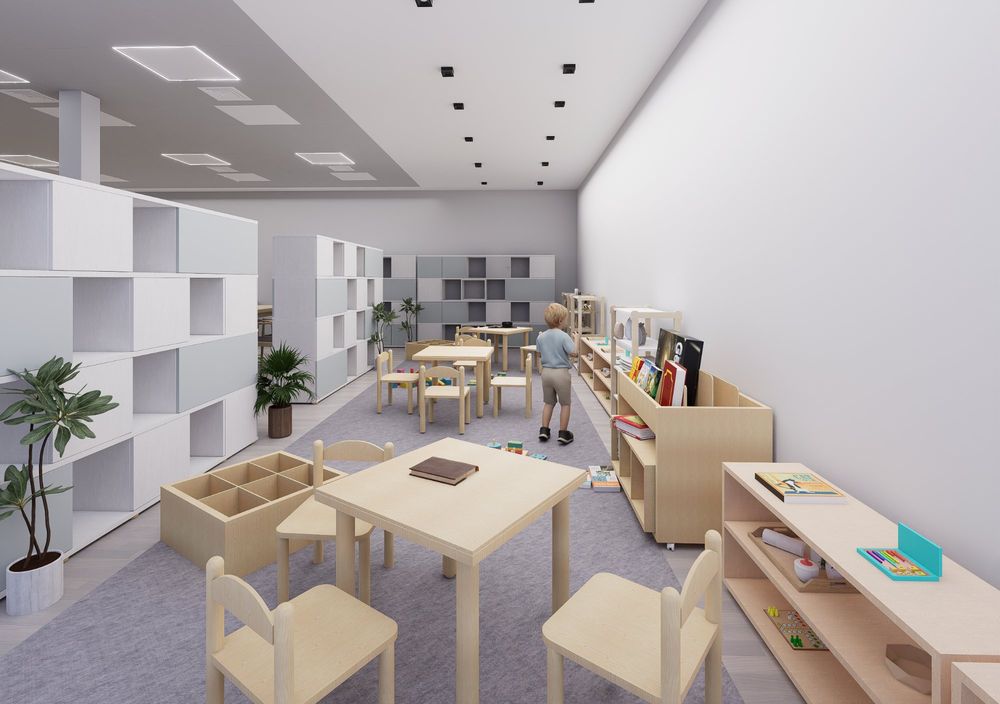
Render of the Montessori children's environment: low shelves of materials, child-sized tables and chairs, and a play rug
Floor 4The children's environment, where trainees practise
Render of a bright training room with rows of tables and large windows
Floor 2Training rooms for the 0–3 and 3–6 courses
Render of a study lounge with upholstered chairs around shared tables
Floor 3Study lounge for trainees
Render of a trainee room with wooden bunk beds and a study desk along one wall
Floor 3Trainee residence, with study desks in every room
Render of an accessible trainee room with bunk beds, a wheelchair and floor-to-ceiling windows onto a balcony
Floor 3An accessible room, so every trainee can stay
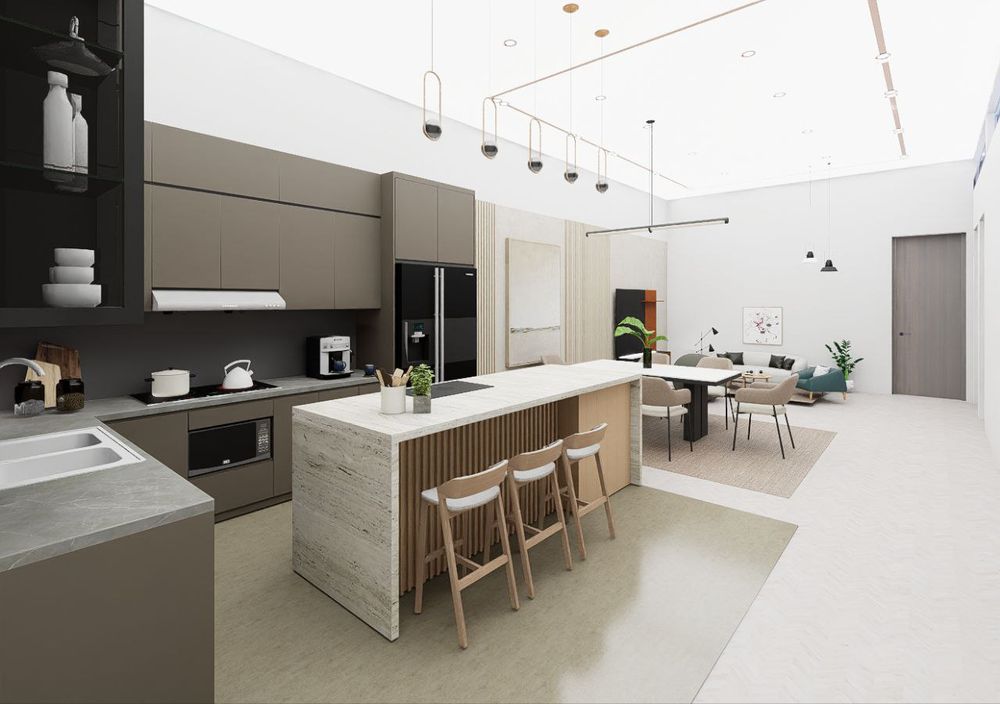
Render of a shared kitchen with an island and a dining and lounge area beyond
Floor 3Shared kitchen and dining

Roadmap

Built step by step, proven before it grows.

20262018–2019 E.C.

Foundations

  • Orientation, parent and CPD courses open
  • Caregiver 0–3 course launches
  • Kebebe Tsehay Orphanage furnished
  • Woreda 11 daycare pilot
  • First sponsored places
20272019–2020 E.C.

Practice network

  • Network of approved practice daycares
  • 3–6 course developed with partner trainers
  • Top floor and terrace finished; training floors furnished
  • First public impact report
2027–292020–2022 E.C.

Regional hub

  • Diploma-level training hosted in Ethiopia with international and regional Montessori centres, subject to their approval
  • A residence serving trainees from across the Horn of Africa
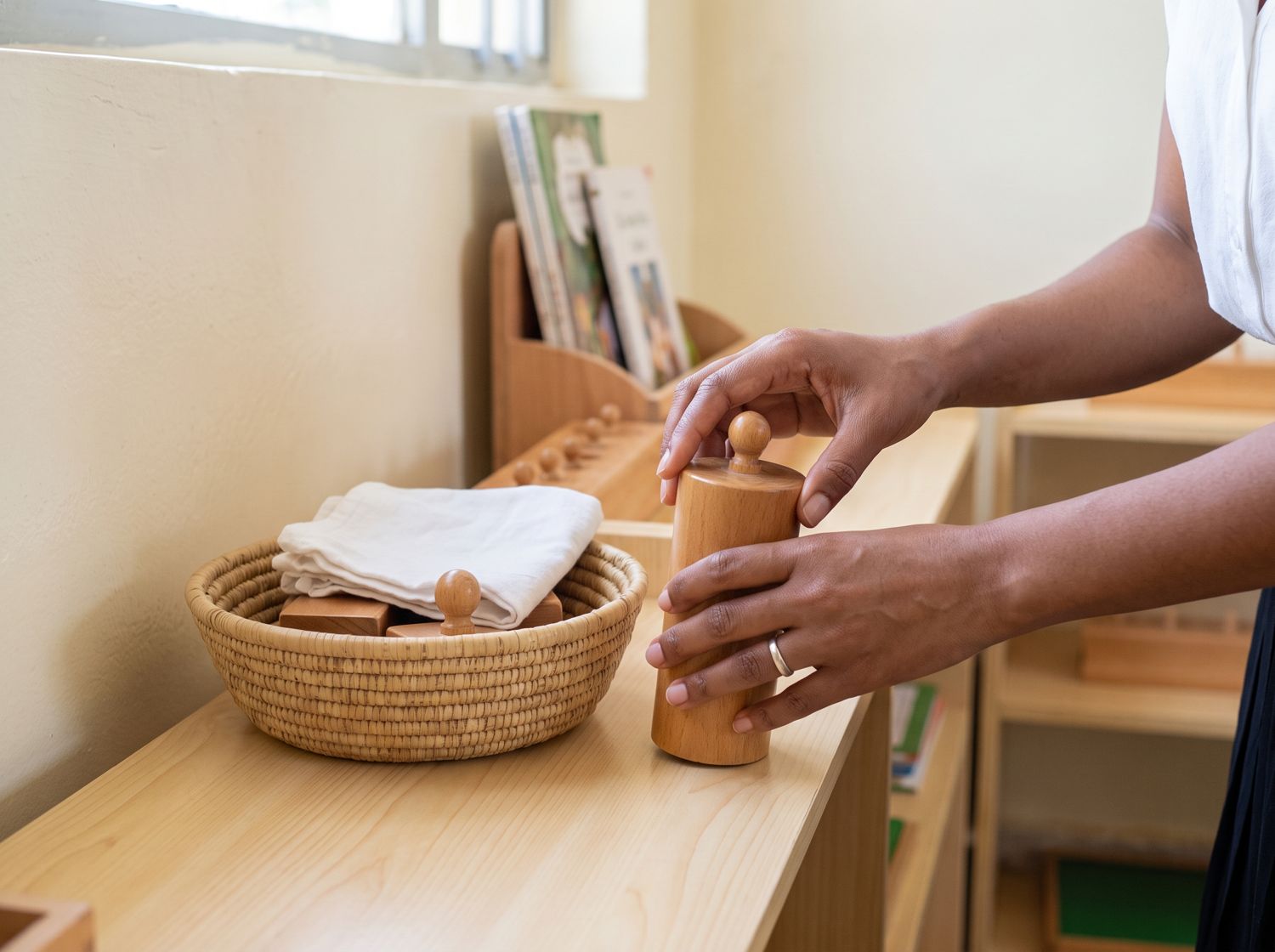
A woman's hands place a wooden cylinder block on a classroom shelf beside a woven basket

Who we are

Since 2012: one team, building things that work in Addis Ababa.

Our story began in 2012 with ICM Communication, creating education and health campaigns for UNICEF, the Ministry of Education and others. It grew into Savannah Printing Press, Felek, Gugut Montessori and now GMIC, with the same leadership throughout. We founded GMIC after our team’s AMI 0–3 (infant and toddler) training, to share that standard with Ethiopian caregivers. We share practice with Montessori colleagues in Kenya and Tanzania.

Gugut Montessori Since 2023Montessori materials, furniture and storybook kits, made in Addis Ababa
Design for Decent Work Since 2022Skills-to-employment training for women in the leather sector, funded by Partnership for Change (Norway). 754 trainees so far.
Felek Since 2016Social enterprise: each leather notebook sold funds a year of exercise books for a child. Over 61,000 books donated by 2020.
Savannah Printing Press Since 2016In-house printing for storybooks, manuals and training resources
ICM Communication Since 2012Social and behaviour change communication for UNICEF, the Ministry of Education, AECOM and others, including school hygiene and back-to-school campaigns
Suleiman ShifawFounder & Director

Designer and social entrepreneur. Founded ICM Communication (2012), Savannah Printing Press (2016) and Gugut Montessori (2023), and co-founded Felek, whose notebooks fund school exercise books for children in marginalised communities. Acumen East Africa Fellow (2016) and participant in the Acumen–IKEA Social Entrepreneurship Accelerator (2020). Completing the AMI 0–3 diploma.

Tigist AsratDeputy Director

With the team since ICM Communication began in 2012, Tigist has co-managed every venture since: Savannah Printing Press, Felek, Gugut Montessori and now GMIC. She has worked with all of our partner organisations and leads GMIC’s day-to-day training and operations. Completing the AMI 0–3 diploma.

Zahara Legesse KauffmanChild Wellbeing & Family Programmes Lead

Psychotherapist and child expert with over 20 years’ experience in the United States and Ethiopia (MA, MSW; MA Art Therapy). Since 2006 she has trained professionals and worked with families in hospitals, schools and courts, including with the Ministry of Health and the Federal Supreme Court. Guides GMIC’s parent programmes and child wellbeing content. Acumen Fellow and co-founder of Felek.

Our training faculty includes trainers completing their AMI diploma training, working with our nurses and medical doctor on health and nutrition.

Based inSummit, Addis Ababa
Operating since2012, as ICM Communication
Training standardTeam completing the AMI 0–3 diploma
Health & nutritionNurses and a medical doctor in our team

Safeguarding comes first. Every trainee, trainer and visitor follows our child-protection policy, and we never share images or details of children without written consent.

Visit the centre

Come and see the work before you fund it.

Walk through the workshop, sit in on a training session and meet the team. Tell us what matters most to you and we will prepare a short proposal with a budget built around it.

LocationSummit / Addis Sefer, Addis Ababa8 km from Bole International Airport

Start a conversation

Tell us a little about your organisation. We reply within two working days, usually with a short proposal.

We use your details only to reply to you.

Chat on WhatsApp